• While Stormtrack has discontinued its hosting of SpotterNetwork support on the forums, keep in mind that support for SpotterNetwork issues is available by emailing [email protected].

FEMA denies assistance in flood aftermath

John Farley

Supporter
Joined
Apr 1, 2004
Messages
2,108
Location
Pagosa Springs, CO
I was out of town when this news broke, but I still find it disgusting. Politics should never matter in disaster aid. And it never has, under presidents of either party, until now. I would love to say more, but will refrain to avoid getting in trouble. This is from the local newspaper in Pagosa Springs, CO.

 
John, what the administration (via FEMA) is doing is shameful, and I share your sentiments!

But, here's a way for residents of your state to fight back: organize a petition drive and send it to Rep. Joe Neguse (CD-2). I've been following some of his committee speeches, and he is impressive. Better yet, one of his committee assignments is the Natural Resources Committee, and river basin flooding relates to matters that come under its purview, particularly if federal lands are involved. For more information, please see the following link:

Committees and Caucuses.

P.S. Admins, I know this is a "touchy" subject, but the arbitrary denial of federal flood assistance funds is something that no one interested in storms or severe weather should ever be comfortable with (and that should pertain to every reader of this website, as well). Also, as the one-time State Floodplain Coordinator for Oklahoma, I find the administration's current actions in Colorado to be utterly repulsive from a purely professional standpoint! Moreover, since when does FEMA "pull rank" over the National Flood Insurance Program (NFIP) when it comes to disbursement of federal flood funds to eligible communities? This is just another blatant example of the out-of-control administration's abuse of power! Please understand that I am not expressing a political view here. If no one ever challenges the status quo, then nothing will ever change to right a perceived wrong. More of us weather enthusiasts need to speak out if bothered by what we read in John's story above. The intelligent readership of ST would be as good a place as any to start that debate! I hope you will not delete this post.
 
Last edited:
FEMA and flood insurance should have never been linked. Insurance is insurance.

FEMA is an utter disaster in and of itself and, as I've written here many times, needs major reform (from my blog early this week: Basic Question No One Seems to Ask: What is FEMA's Future Mission? ).

That said, the denial of $$ for Colorado is no worse than Biden's denial of flood relief for North Carolina and Tennessee after Helena. Both are terrible. This is the danger of politicizing everything. The faster primary disaster responsibility is handed back to the states, the better.
 
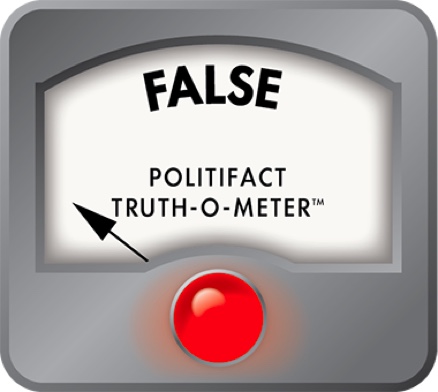
According to Politifact, Biden did NOT deny disaster aid to North Carolina for the floods.


I would not dispute the notion that the response was poor, but it was not the same flat-out denial that our area in Colorado experienced. But I am glad we agree that disaster aid should not be politicized. Aside from the response phase in large-scale disasters, where federal involvement is needed, I am fine with handing the responsibility back to the states, as long as it comes with levels of funding at least comparable to what comes via FEMA now - as I have said before in other threads.
 
The faster primary disaster responsibility is handed back to the states, the better.
Turning over FEMA's responsibilities to the states won't be the end of the politics, either. If a major disaster strikes multiple states, some of those states will weather (no pun intended) it better than others, which may cause disputes between states as to how each state's funds are apportioned (whether mutually or individually). The likelihood is that in a really big, widespread disaster, most, if not all, states' budgets will take a big hit, and to lessen the blow, some may be forced to partner with other "wealthier" or more populous adjacent states to address major problems or needs in common [e.g., road repairs (excluding U.S. highways or Interstates) where the road crosses a state line; dam/levee breeches where upstream flooding from one state may become a significant factor in causing harm to another state downstream, etc.].

I suspect that as time goes on, interstate compacts will be drawn up requiring all states in vulnerable regions (whether hurricane-prone Gulf Coast states or tornado-prone Central and Midwestern states) to enjoin. Ditto for the west-coast states where earthquakes, tsunamis, and wildfires are an ever-present threat. This compact system may work well to reduce the possibility of future squabbles and lawsuits between states, but it also carries a downside risk in which the end result will be to raise state tax levees on the residents of all states. Texas residents, for example, may be able to absorb the higher taxes (which will not be levied on state income, but rather as a special disaster/emergency surtax); but Mississippi residents, who cannot afford to support a big tax-base increase, may balk at this kind of solution.

So, we're right back where we started: too big of a problem and too little revenue to solve it. That was the rationale that led to the creation of FEMA to begin with...and at first, it worked pretty well...until partisan politics got in the way!
 
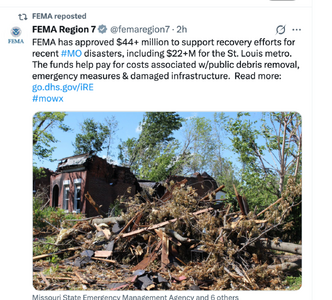
While I do disagree with the denial of the debris cleanup request, I would note two things. First, it does not negate the information in the Politifact article that other requests for that disaster were approved, and second I would note that Trump did the same thing with regard to the debris removal request for the tornado in St. Louis. Not sure why FEMA denied the cleanup request in NC, as that state's governor was a Democrat so there may have been other reasons than politics. But either way, it should not have been denied. As to the first article, FEMA employees who told people to skip houses with Trump signs were fired for doing that, as they should have been.
 
John, thank you.


Everyone: Please take a moment to read this: Basic Question No One Seems to Ask: What is FEMA's Future Mission? I believe this is a really good solution to the problem but I'm wondering if it isn't getting traction because no one knows what "Hurricane Bonds" or "Disaster Bonds" are.

A hurricane (only) bond might cost (rough example) $5,000 and will cover the area if a Cat ≥3 occurs (again, example). If the location that purchases the bond is struck by a covered storm, that $5K bond would pay off something like $100,000. If I recall correctly, the government of Jamaica got something like $150,000,000 from its hurricane bond this year. John and others are correct that a state might not be able to pay off a major disaster by themselves (just like you couldn't replace your home after a major fire), but they could with these bonds. These can be written for floods, tornadoes, et cetera.

This takes the federal political mess out of the equation. It also helps to restore the proper function of homeowners insurance that was so screwed up by President Obama's administration during and since Sandy. (I've written about that before on this board.) FEMA has never worked as it should. Past time to try something else.
 
Last edited:
Back
Top