Chris Carter
EF3
Chasers are reporting a wall cloud with the cell near Talmage, NE. My eyes are watching the cell that just formed south of Omaha to see if that will go severe as well.


 Click for large view
So, the Tornado Watch seems to be on the south side of the storm that is going tornadic and that 3000 CAPE is holding strong in the Watch box which is why that area is empty right?

I'm a little surprised to see this event unfold the way it has. The parameters today looked just as good as they did yesterday, which went fairly bonkers given the low shear. I think the difference today has been the presence of that shortwave moving across NE/SD providing more forcing than there was for storms yesterday. Seems that extra forcing caused more widespread development across SE NE and NE KS, which caused problems for storms in terms of remaining discrete. There was probably a lot of interference with outflow from one storm impeding the inflow of a neighboring storm, and thus a given storm didn't have as much time to become organized and go tornadic. I think there was also more 0-3 km CAPE yesterday than today. Seems it's much more likely for storms to get interesting when there is more 0-3 km CAPE.
As of right now, that storm that is crossing the MO-IA border north of Maryville has broad rotation and seems to be the storm to watch as it is generally furthest south where instability is greatest and has direct access to the 30-40 kt LLJ that has developed. Still looks kinda grungy, though, and is leaving the area of decent SBCAPE behind. It probably will become elevated soon if it hasn't already.

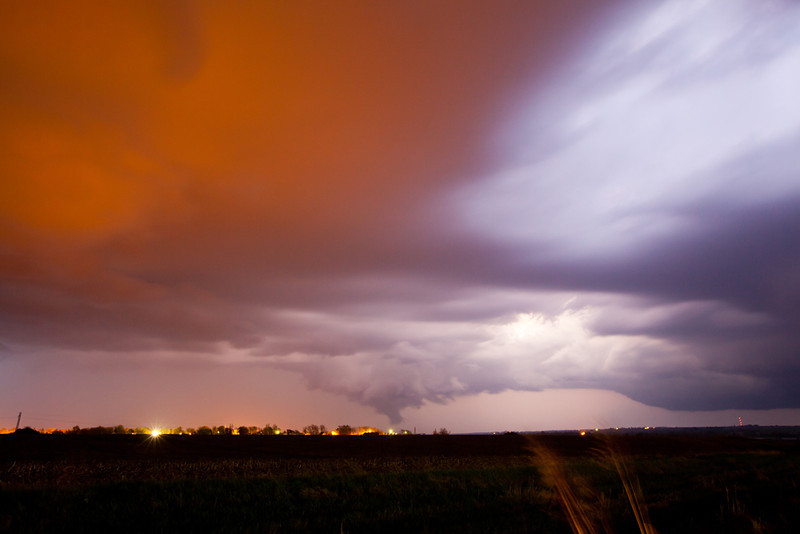
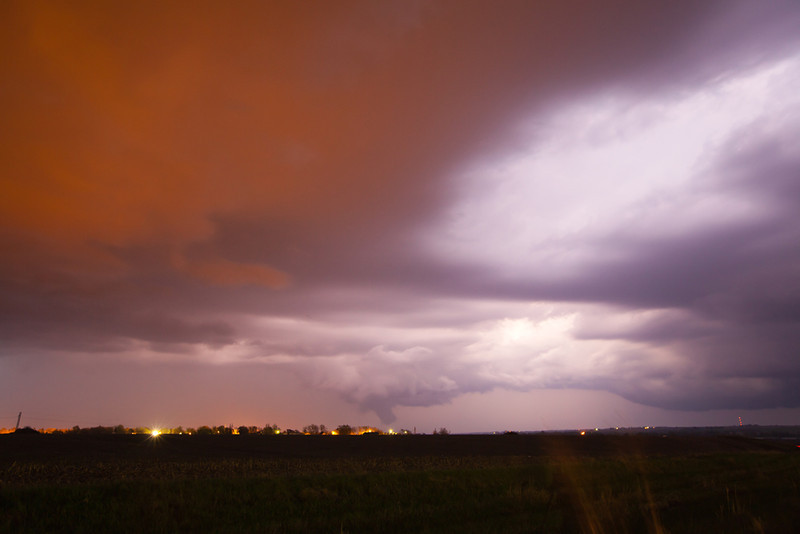
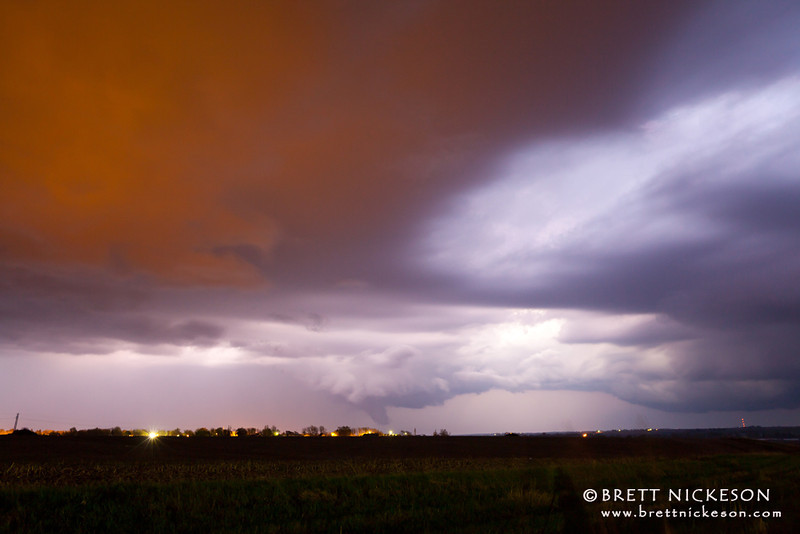
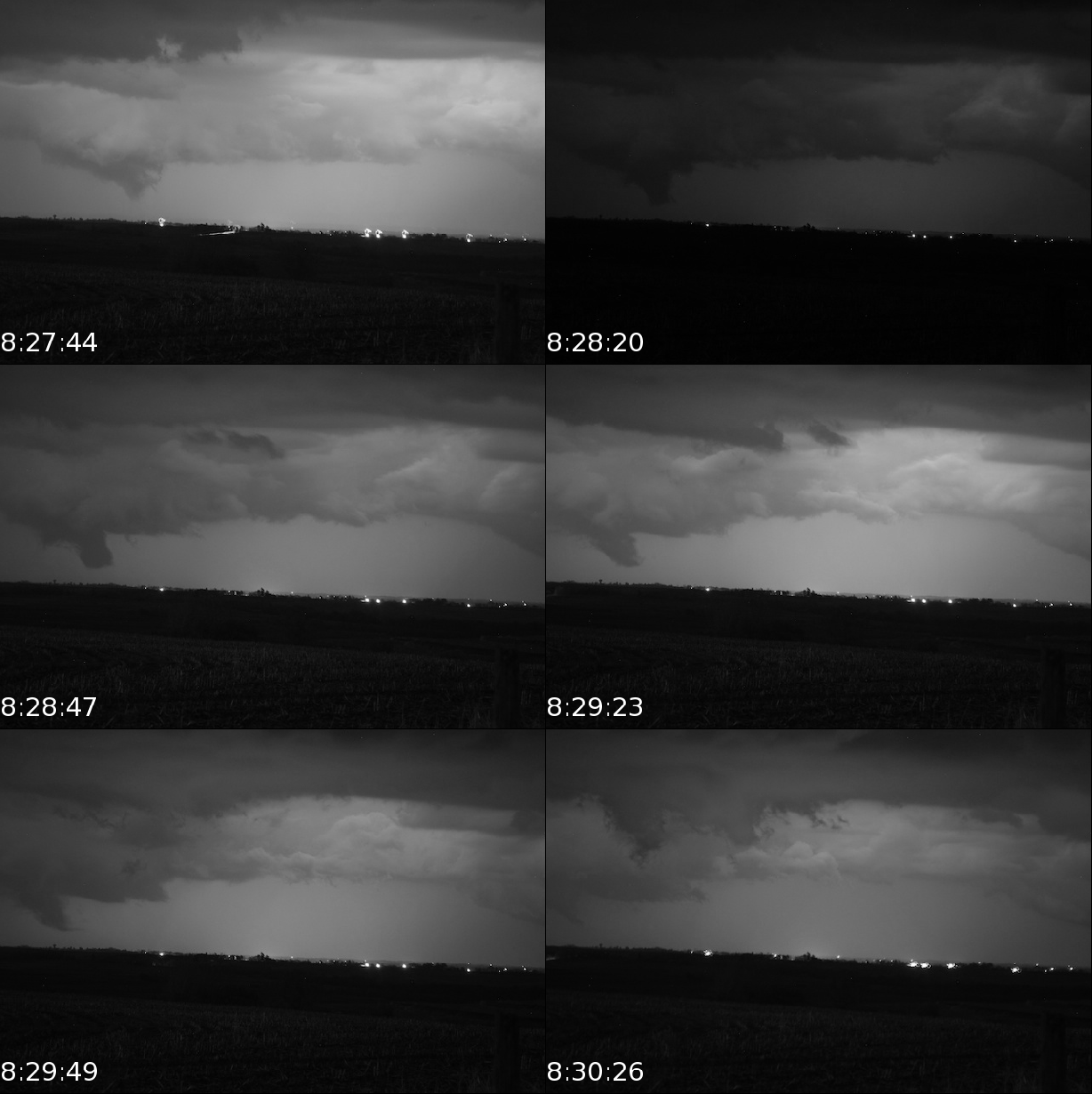
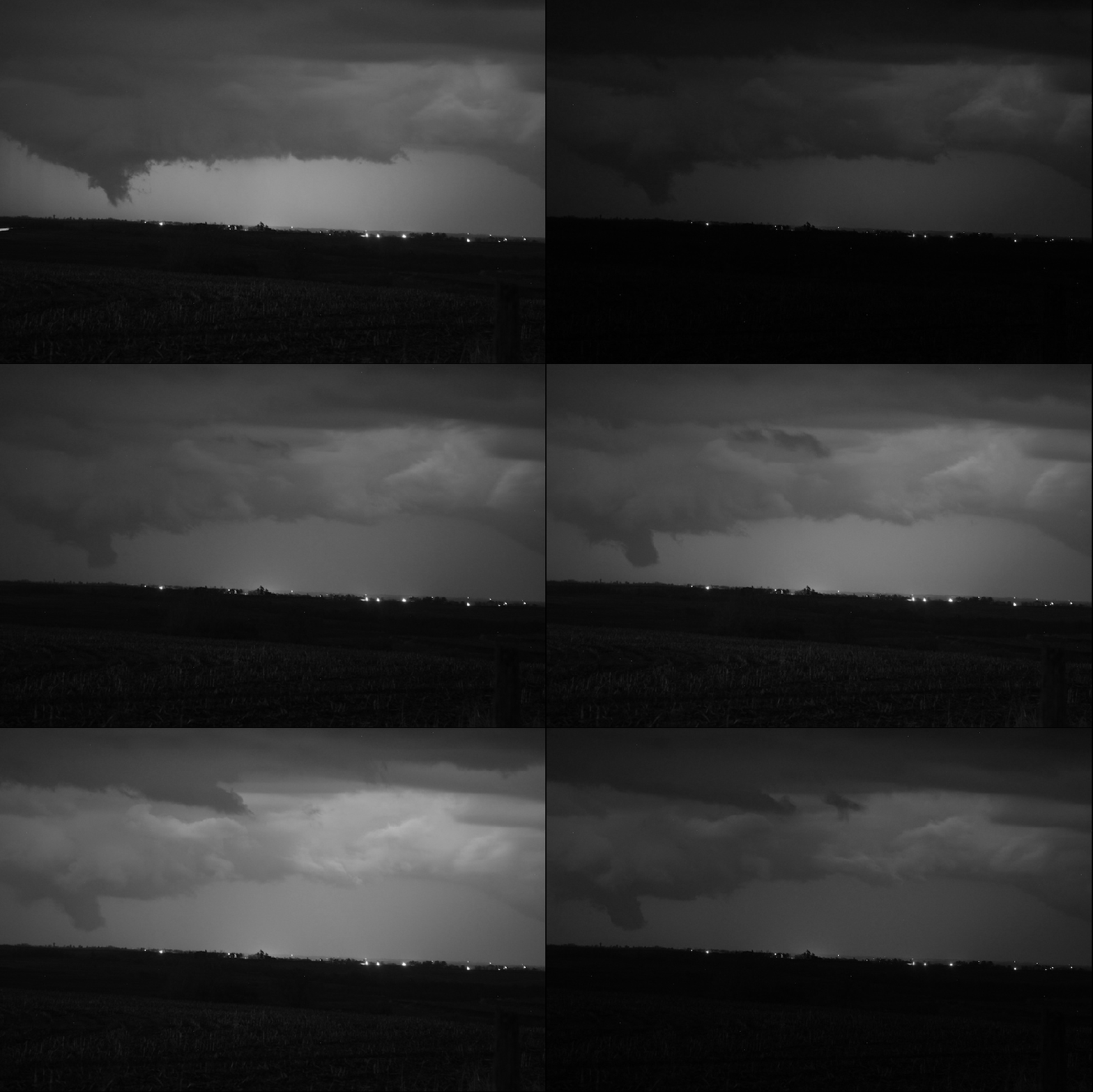
Finally, just after Rockport, MO, the storm produced a new wall cloud and deep funnel that just couldn't quite make it down.
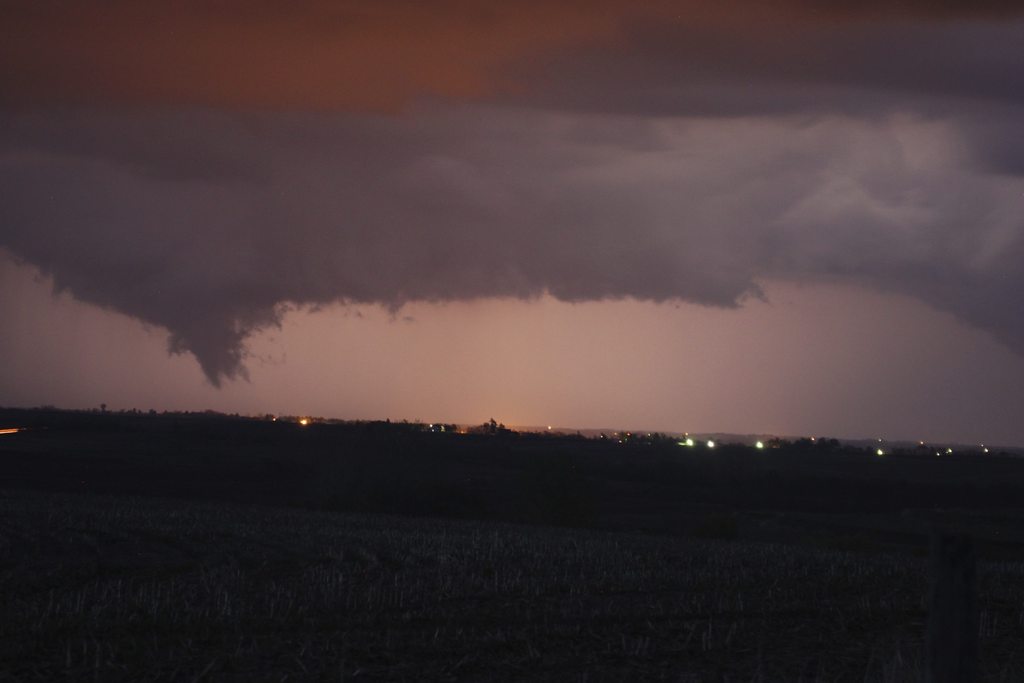

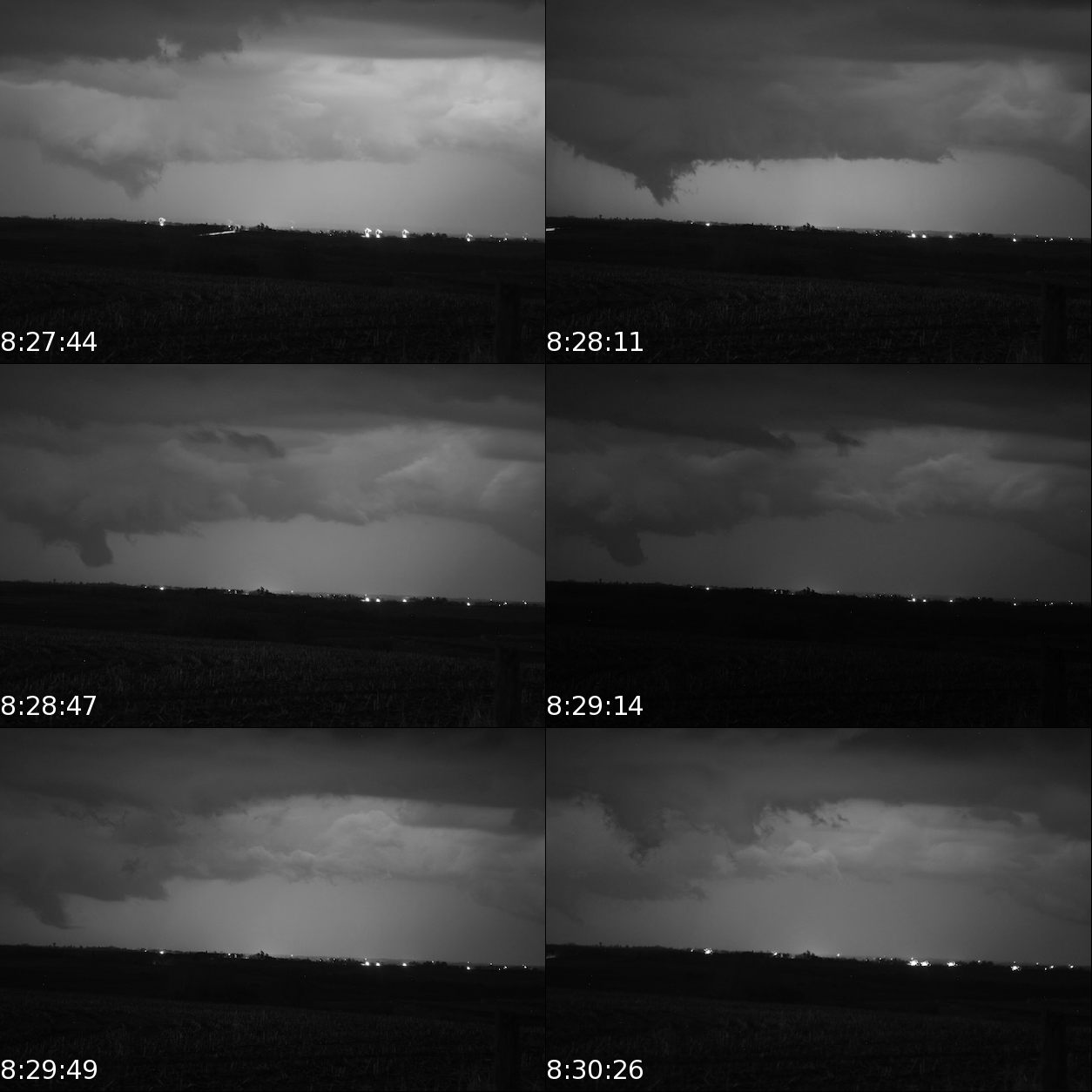
I've seen this feature cited a few times as a funnel cloud in other reports. Does anyone have video of this feature showing strong rotation? Probably not since it was at night. It screams scud. Look at how ragged the bottom of that feature is. Look at the scud immediately surrounding it, and under the base next to it. The orientation of the feature suggests it's bowing outward from outflow. The right edge of the lowered base (on the right side of the image) has almost the exact same structure. Would you call that a funnel too? I'm not trying to rain on everyone's parade, but I think we should have higher standards than to call every chunk of scud under an updraft base a funnel. This is especially important when it comes to reporting. We need to be objective in our reports to make sure the NWS gets the ground truth, and not a bunch of chaser/spotter hype because everyone out there wants to see tornadoes and funnels.
Please elaborate on this image/storm if you have better evidence showing that it is a funnel. Otherwise, I think we need to go back to basics here and stress good reporting. Watch that feature for at least a couple minutes for strong rotation. It should be rapid and persistent. Scud, while it too can have dramatic motion, often falls apart in less than half a minute. Funnels typically have a smooth, laminar, cone shape to them. Reporting funnels at night is incredibly difficult. What you can do though is watch between lightning flashes to see if it holds its shape for at least a couple minutes. Scud will have usually morphed into some other shape by then or fallen apart. If you've got a smooth laminar point (and not a ragged lowering with multiple points) that persists for a couple minutes, you're probably looking at a funnel.