Tyler Burg
EF2
Funny this thread is now 3 pages long and it's still in the Winter weather section LOL.



Snow, freezing rain, freezing drizzle and freezing fog are the weather. No other agency is equipped with the tools to forecast for these hazards.
The point is not to know what the road conditions are. The point is to know when the ingredients for icing are in place and to issue warnings when they are imminent or occuring.

NWS Directive 10-513 said:...for high impact events which do not meet local warning criteria. For example, a Winter Storm Warning is forecasted but accumulations are not going to be met, but will be close. If it is early in the season or during a critical time of day such as rush hour when the impact will likely be greater, then a Winter Storm Warning might be warranted. The forecaster has the discretion and should not be held back from issuing what best mitigates the impending winter hazard even if criteria may not be met in the strictest sense.
There's a feeling of helplessness, though we all know that some precautions can be taken. The loss of life is directly attributable to the weather phenomenon. On the other hand with the ice, it's not the ice itself that took the life. The person driving the car was responsible, i.e., even if you are going 25 mph in a 70 mph zone and you crash into another car on the ice, the state trooper will still hand you a ticket that says "too fast for conditions." This situation was, in many respects, within your control, whether you chose to do anything about it or not. Thus, the loss of life is indirectly attributable to the weather and directly attributable to a lack of caution on the motorist's part.
There are probably more "Bridge May Ice in Cold Weather" and "Bridge Freezes Before Roadway" signs on the highway than any other type of sign. How many times do you see that message repeated over and over as you drive along? Is this repetitive safety rule (or public education effort, if you prefer) effective?
They are called "freezing rain warnings" and "ice storm warnings." What am I missing here?
There is also a misunderstanding about the other hazards. The reason the tornado /severe thunderstorm death tolls are so low is because we have a highly effective warning system. We are at, what, 20 tornado deaths in 2009?! Amazing, even if it has been a below normal year for tornadoes.
My gosh, in 1953 alone, there were three separate tornadoes, from Texas to Massachusetts, that killed more than 90 people!

Many of the factors associated with a "Road Ice Warning," such as road surface temperatures, are very specialized data sets that the NWS does not forecast.

I'll throw this item out for discussion: It would help if the term "black ice" were abolished. Ever see black ice on a concrete interstate (where a lot of the higher-speed motorists run into trouble on the ice)? Is it really black on that white concrete? Why do we use a term that does nothing but confuse the subject in areas where ice is relatively uncommon anyway?
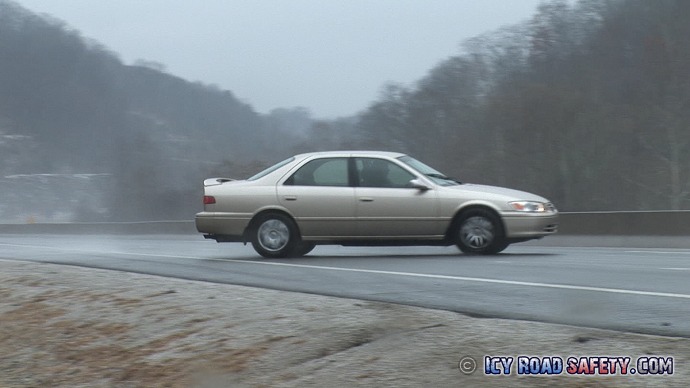
I think this picture says it all. Do you really need a warning or a road sign to tell you it is going to be icy and dangerous to drive this road today?
I think there are too many T-storm warnings but to have to add more winter weather warnings and more signs to tell you that this road is dangerous? Do you really need anything more than to know there is a chance for snow coming? When you get out on the road and see this then all of that should be pretty obvious.
I understand you don't like the death toll related to winter weather but maybe it's the natural consequences that come with using no common sense.... Yes they will often take others with them that were innocent of their stupidity but if they aren't using a lick of common sense when entering this roadway do you really think they will heed yet more warning signs any better?
It would help if the term "black ice" were abolished. Ever see black ice on a concrete interstate (where a lot of the higher-speed motorists run into trouble on the ice)? Is it really black on that white concrete?