Tony F
Enthusiast
- Joined
- Jan 1, 2026
- Messages
- 1
I've been watching a lot of stuff about tornado interceptors like the Dominator and had an idea for a different way to keep them stable. I wanted to post it here to see what you all think, since you're the experts.
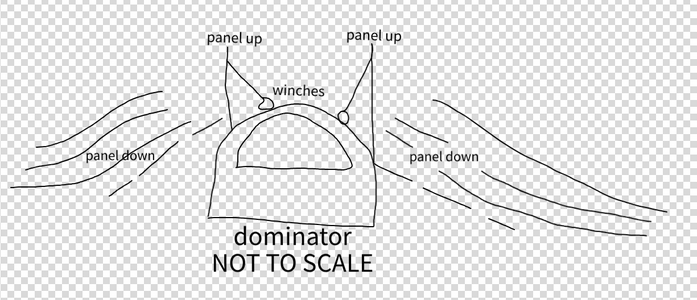
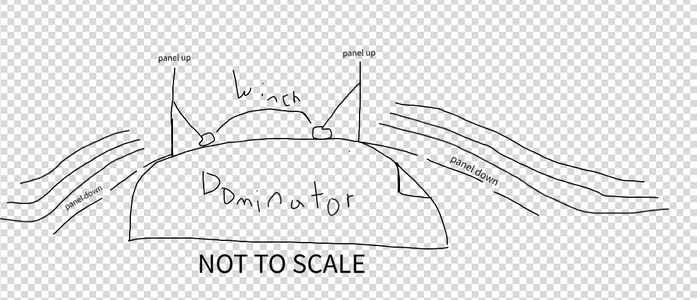
I was watching Formula 1 and learned how their floors create "downforce" to suck the car to the track at high speed. I wondered if you could use a tornado's own insane wind to do the same thing to an interceptor. My thought is to add a special floor and side panels that deploy to channel the wind underneath, creating suction to help hold the vehicle down faster than spikes can deploy.
The problems I know about (and my attempts to fix them):
I know the two biggest issues right away are debris wrecking everything and wind coming from the side and flipping it.
·For debris, I thought a heavy-duty angled grate at the front could block or deflect the big stuff (even if it messes with the airflow a little).
·For side winds, I'm not totally sure. Maybe the side panels could help, or it needs a different shape.
I'm not saying this is a perfect design—it's just a concept I've been turning over in my head. I don't have the math or software to test it, which is why I'm asking here.
I do have some questions. 1. Has anyone ever tried or modeled using aerodynamics like this for an interceptor?
2. What's the main reason this wouldn't work in the real world
3. If it's a totally bad idea for a big truck, could the concept work for a smaller, unmanned drone?
I'd really appreciate any feedback, even if it's to tell me why it's impossible. I'm just trying to learn.
I was watching Formula 1 and learned how their floors create "downforce" to suck the car to the track at high speed. I wondered if you could use a tornado's own insane wind to do the same thing to an interceptor. My thought is to add a special floor and side panels that deploy to channel the wind underneath, creating suction to help hold the vehicle down faster than spikes can deploy.
The problems I know about (and my attempts to fix them):
I know the two biggest issues right away are debris wrecking everything and wind coming from the side and flipping it.
·For debris, I thought a heavy-duty angled grate at the front could block or deflect the big stuff (even if it messes with the airflow a little).
·For side winds, I'm not totally sure. Maybe the side panels could help, or it needs a different shape.
I'm not saying this is a perfect design—it's just a concept I've been turning over in my head. I don't have the math or software to test it, which is why I'm asking here.
I do have some questions. 1. Has anyone ever tried or modeled using aerodynamics like this for an interceptor?
2. What's the main reason this wouldn't work in the real world
3. If it's a totally bad idea for a big truck, could the concept work for a smaller, unmanned drone?
I'd really appreciate any feedback, even if it's to tell me why it's impossible. I'm just trying to learn.