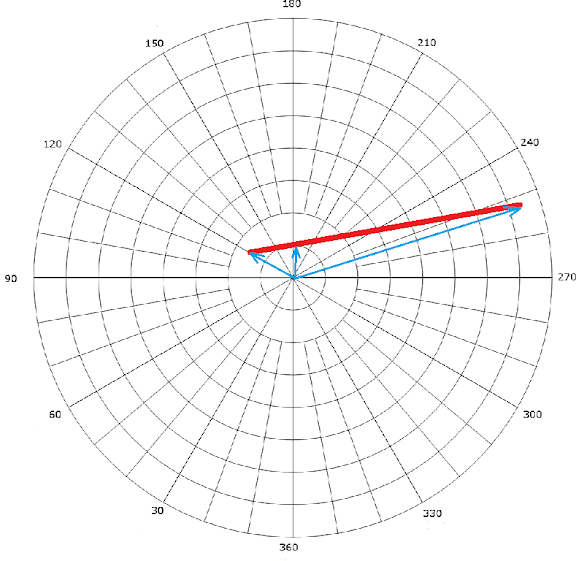
There are two important things to remember here.
The first is that observed soundings have sampling issues in that they're only sampling a small part of the atmosphere at a given time. Given the sparse radiosonde network relative to the surface network, we often assume that conditions in the general area (~200 km radius) of the radiosonde are the same as at the radiosonde, which is probably not a good assumption when you're close to the storm and the radiosonde is not. Thus, the sounding may not be a true representation of what the storm is experiencing.
The radiosonde also is not a true vertical profile of the winds because it's being blown by the wind. This means that you could be sampling a point in the atmosphere that is 50 km away from the radiosonde launch site and assuming it's over the launch site. This is usually only a problem in the upper levels of the atmosphere on days when the winds are really strong, but it's something to keep in mind.
The second thing is that without a thunderstorm updraft, there is no vertical vorticity*. In that case, all the vorticity is in the horizontal. The updraft acts to tilt that vorticity into the vertical, which produces a pair of "vortexes" rotating in opposite directions. The image below gives a good illustration of that.
(Source:
http://bit.ly/kftw1y, adapted from Bluestein 1999)
Which one of those vortexes gets accentuated into the mesocyclone depends on the storm motion and the exact shape of the hodograph. If you have a clockwise-curved hodograph, you probably have some storm-relative component of the wind that is "pushing" the counter-clockwise vortex into the updraft, where it gets stretched and accentuated. I can't find the picture right now, but on the wind profile on the image above, think of a southerly component to the wind (a north-pointing arrow) in the mid-levels of the atmosphere, and you can kind of get the picture.
Does that help?
*If you're not familiar with the term "vorticity," you can think of it as a measure of how much the air is rotating. Really, this rotation is on the microscopic scale, but for visualization, it helps to think of it on the scale of something you can see.